9 Best AI Tools for Restaurants (2026) That Save the Dinner Rush
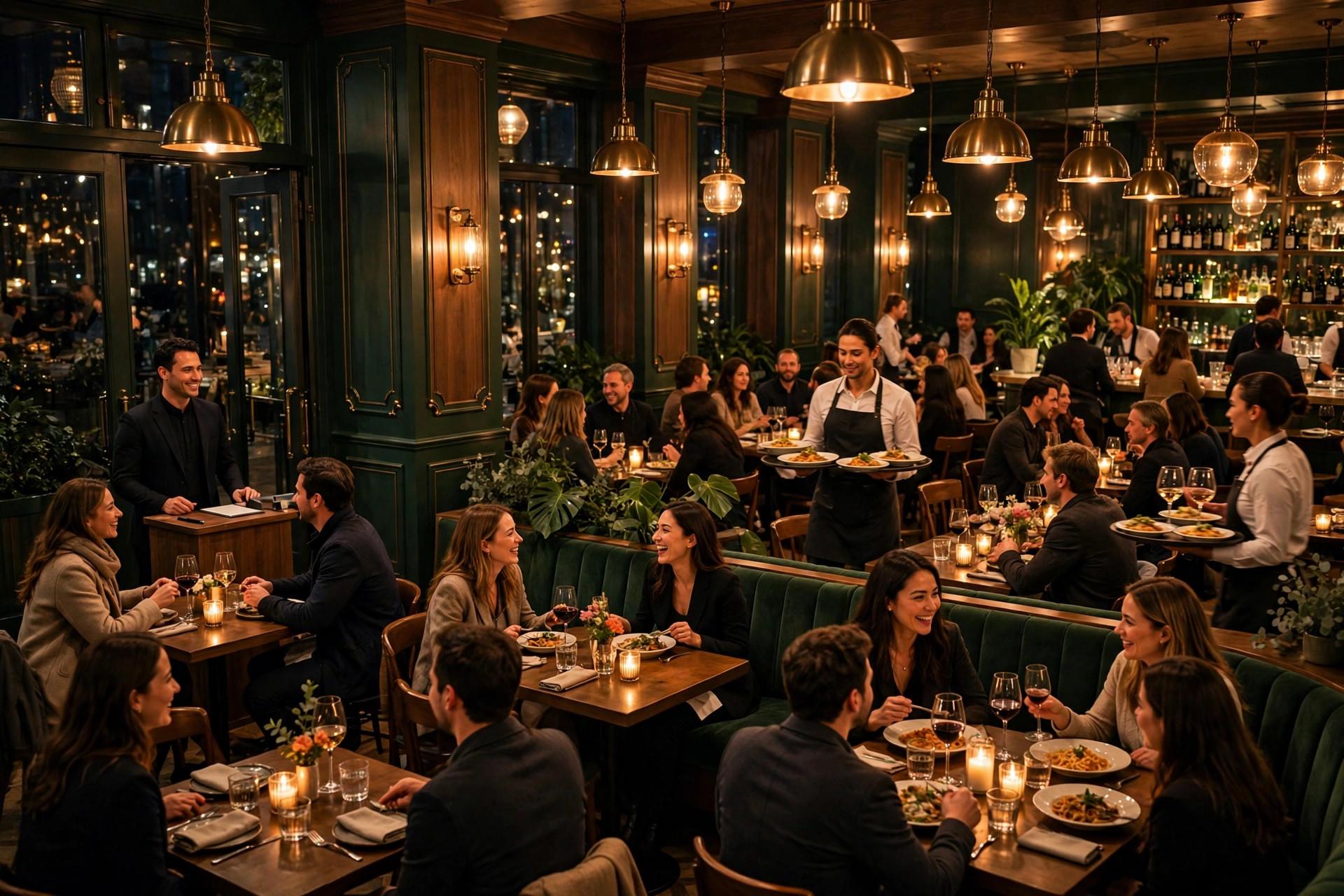
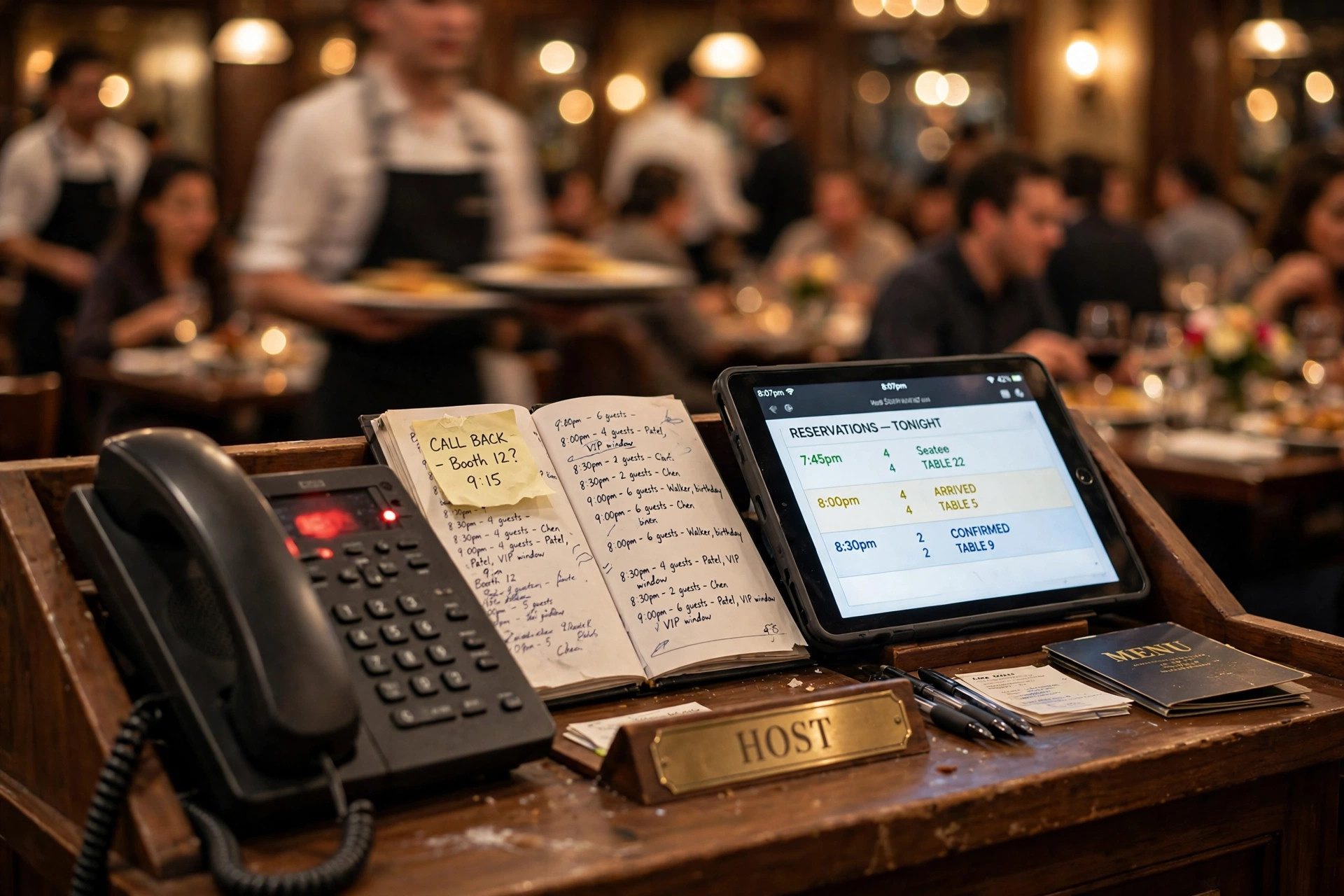
Friday, 7:58 PM. The dining room is full, the kitchen is firing on all cylinders, and the phone at the host stand rings for the sixth time in ten minutes. Nobody can pick it up. Every hand is carrying plates, seating guests, or running food. So the caller does what callers do: hangs up and books the place down the street that answered. Multiply that moment by every weekend night, plus every lunchtime takeout order that died on a busy signal, and you have the most expensive sound in the restaurant business: a ringing phone nobody answers.
That leak is exactly what restaurant AI is built to plug. The tools in this guide answer calls and messages in seconds, take reservations and phone orders properly, manage your waitlist, reply to reviews, and run the marketing most owners never get to. I ranked the nine best for 2026 by the job you actually need done.
How I Chose These Nine
A restaurant tool earns its place here only if it does a real shift, not a demo. It has to answer during the rush and after hours, and finish the job it starts: a reservation confirmed in your book, an order ticket in your POS, a waitlist text sent, not a note for someone to chase later. It has to know your actual menu, hours, and policies rather than improvising. Pricing had to be published or honestly describable, and it had to fit an independent operator's reality, because most restaurants have no IT department and no spare host.
The nine split into three families. AI receptionists and phone hosts answer people: Souriria, Slang.ai, Hostie, and Sadie. Phone-ordering systems close takeout and delivery orders: Loman and Kea. Platforms run the book and the marketing: Yelp Guest Manager, SevenRooms, and Popmenu.
1. Souriria: Best Done-For-You AI Receptionist for Restaurants
Full disclosure: Souriria is built and run by the team behind ToolPilot Pro. That is also why we can tell you exactly how it works, what it costs, and where its limits are, with no sales fog.
Souriria is a French AI agency service, not another dashboard you have to learn. Its assistant is trained on your restaurant: your menu and daily specials, your allergen answers, your opening hours, your private-hire rules, your cancellation policy. The team audits your information, trains the assistant in your tone of voice, connects it to your website chat and WhatsApp, and puts it live in 3 to 5 days. During service, and at 2 AM, it takes reservations with date, time, and party size, answers menu questions from your real card, and qualifies large-group requests for a callback, replying in about a second. Its restaurant page puts the cost plainly: an estimated €1,500 to €3,000 a month of covers lost when nobody can pick up.
What Souriria actually does for a restaurant
- Takes reservations 24/7, in seconds. On your website chat and WhatsApp from the Growth plan, confirmed instantly, even mid-service and after hours.
- Answers from your real menu. Dishes, set menus, allergens, vegetarian options: the assistant replies from your synced card and never invents a dish or a price.
- Speaks 6+ languages. French first, plus English, Spanish, Italian, German, and more, which matters when the tourist at your door cannot ask about the menu in French.
- Adds a voice agent on Scale. The top plan answers the phone itself and takes reservations by voice, for restaurants whose leak is the ringing phone specifically.
- Hands delicate cases to your team. Private events, complaints, and anything outside its training reach a human with the conversation attached.
- GDPR compliant, data hosted in Europe. A hard requirement for European restaurants handling guest details.
Souriria pricing, published and in the open
Souriria posts its prices on its pricing page, which is still rare in this industry:
- Starter, €240/month plus setup from €1,190. Website chatbot in 1 language (French), trained on your menu and hours, human handoff, conversation statistics, email support.
- Growth, €640/month plus setup from €3,190. Adds WhatsApp Business, 2 languages, booking integration, and follow-ups on abandoned conversations. The plan most restaurants choose.
- Scale, €1,450/month plus setup from €7,400. Adds the AI voice agent for phone reservations, unlimited languages, and point-of-sale integration.
There is a 3-day money-back guarantee after launch, an initial 3-month engagement, then cancellation with 1 month's notice.
The honest limits
Souriria is new, and this guide will not pretend otherwise. It has no public review history yet, unlike Slang.ai or Hostie below, whose users you can read by the hundred. It is French-market first: French is its home language and support culture, even though the assistant works in English and more. The setup fee is real money, because the training work is done by people. And it is a receptionist, not a POS: if your problem is hundreds of takeout orders a night that must land in Toast or Square untouched, Loman and Kea further down are built for exactly that.
2. Slang.ai: The Premium AI Host for Reservation-Led Restaurants
Slang.ai is the polished, brand-forward choice for restaurants where the phone experience is part of the product. Its Superhost answers instantly, lets callers interrupt and change their minds mid-sentence like a real conversation, detects and switches between 97 languages, and offers 20 premium voices with greetings matched to your brand. Crucially, it books end to end inside OpenTable, SevenRooms, Resy, Tripleseat, and Yelp, so a call becomes a confirmed table, and it routes recognized VIPs straight to your staff.
Pricing is published: Core from $399 a month per location ($379 on annual billing) and Premium from $599 ($539 annual). The honest limitation is scope. Slang is a reservations and questions tool, not a phone-ordering tool: for takeout it texts the caller a link to your online ordering page rather than closing the order on the call. For a reservations-led dining room, that trade is fine. For a pizza place living on phone orders, keep reading.
3. Hostie: The Virtual Concierge for Calls, Texts, and Emails
Hostie takes a wider brief than a phone host. It answers calls, texts, and emails in your restaurant's voice from one unified inbox, books and modifies reservations through OpenTable, Resy, Tock, and SevenRooms, handles event inquiries, and supports guests in more than 20 languages on its upper plans. Built by restaurant operators, it shows: Harborview Restaurant & Bar reports automating 84 percent of incoming calls.
Pricing is published in three tiers: Essential from $199 a month per location, Premium from $399, and Hospitality Plus from $599 for multi-location groups. The order-taking side depends on integrations (Olo, Toast, Square) rather than being native, so if closing phone orders is your main job, test that flow carefully in the trial.
4. Sadie: The Friendly AI Host That Goes Live in a Day
Sadie is an AI host built for hospitality venues, used by more than 1,500 restaurants according to its site. She answers every call around the clock, takes and modifies reservations, handles takeout orders, collects deposits securely, routes private-event inquiries, and transfers to your team when a call needs a person. She integrates with OpenTable, Now Book It, and Libro, plus major point-of-sale systems, supports English, French, and Spanish, and works with your existing phone number. The standout fact is speed: Sadie says venues go live in under 24 hours with guided onboarding and no technical setup.
On pricing, be aware of the shape rather than a single number. Sadie's own site quotes by business type and usage; software directories such as SourceForge list a starting price of $92 a month, which would make Sadie the cheapest credible AI host in this guide if your quote lands near it.
5. Loman: Best for Closing Full Phone Orders Into Your POS
Loman draws the line this category keeps blurring: answering a call is not the same as closing an order. Loman's voice agent takes the full order on the call, modifiers and all, collects card payment during the conversation, suggests add-ons with a built-in upselling engine, and pushes a finished ticket straight into your point of sale. It syncs two ways with nine named partners: Toast, Square, Clover, SpotOn, SkyTab, Aloha by NCR, Olo, Stream, and OpenTable, handles unlimited concurrent calls, and also takes reservations. Operators cited on its site report up to 22 percent higher phone revenue and 75 to 100 extra orders a month per location at Tony Boloney's.
Loman's own guides cite pricing starting at $199 a month, flat, with no per-minute charges, the right shape for a rush-driven business: the bill is the same whether the phone rings 20 times or 200 on a Friday. Its pricing page itself asks you to book a demo for your exact tier, so treat $199 as the stated floor and confirm your quote in writing.
6. Kea: Voice Ordering Built for High-Volume and Multi-Unit Restaurants
Kea is the heavy-duty option, proven at chains like &pizza, Via 313, Curry Up Now, and Hopdoddy, and now open to smaller operators through a self-serve setup it says takes about 30 minutes. Kea answers unlimited calls at once, takes orders with modifiers directly into 11+ POS systems including Toast, Square, Clover, and Olo, handles payments by card, Apple Pay, and Google Pay, manages reservations and waitlists, detects 86'd items and suggests substitutions, and throttles orders when your kitchen is backed up. Its accuracy claim is 99.3 percent, backed by an internal checking agent that verifies every order against your menu.
On pricing, Kea promises one flat monthly price with no per-order costs or hidden fees, but does not print the number on its own site; third-party listings put the flat rate at $450 a month per location. For a single quiet dining room, Kea is more machine than the problem needs. For a high-volume takeout operation or a growing group, it is the industrial-strength pick.
7. Yelp Guest Manager: Reservations and Waitlist Where Diners Already Look
Yelp Guest Manager is the platform play for restaurants whose guests find them on Yelp, Google, and Apple Maps. It runs reservations and waitlist across all three, plus booking links from Facebook, Instagram, and TikTok, with no cover fees: diners can even book a table or join your waitlist from inside ChatGPT. The host app handles floor plans, two-way texting, automatic table statuses, and daily analytics, and the Plus tier adds guest profiles, credit card holds, and POS integration. Then there is the AI layer: Yelp Host, its voice agent, answers your phone for reservations, waitlist, and takeout, and starts at $249 a month, or $199 for Guest Manager customers.
Guest Manager pricing is published: Basic at $159 a month, or $129 billed annually, covering up to 500 covers a month; Plus at $349, or $279 annually, with unlimited covers. The honest caveat is gravity: the system's value grows with your Yelp presence, and it does not replace a dedicated AI receptionist for menu questions in your own voice the way Souriria or Hostie do.
8. SevenRooms: The Guest CRM for Restaurants That Want Their Data Back
SevenRooms is the strategic choice for groups and ambitious independents: reservations, table management, and waitlists combined with a guest CRM that auto-builds profiles with preferences, visit history, and spend, then turns them into segmented email and SMS marketing automatically. Direct bookings through your own channels carry no cover fees, and the data is yours, which is the entire pitch against marketplace platforms. It also includes a voice AI that answers inbound booking calls, a booking widget in 14 languages, prepayments to cut no-shows, and more than 100 integrations. More than 14,000 venues use it, and since June 2025 it has been owned by DoorDash.
Pricing is quote-based only: three packages with add-ons, priced by sales, with third-party estimates for full venues tending to start around $499 a month. A single neighborhood restaurant that just needs the phone answered will find SevenRooms heavier than its problem. A group building a direct-booking program and a real guest database will find it is the platform the others integrate with.
9. Popmenu: The Marketing Suite With AI Answering Built In
Popmenu attacks the other half of the week: not the rush, but the empty Tuesday. Serving more than 12,000 restaurants, it combines an SEO-driven website, interactive menus where every dish gets its own searchable page, commission-free online ordering, and AI-written email, SMS, and social campaigns, with guest data owned by you rather than a marketplace. Its Premier tier adds reputation management, so reviews get monitored and answered from the same dashboard, plus a digital waitlist and reservations. It also offers 24/7 AI phone answering that takes orders and answers questions, the only entry here covering discovery, marketing, reviews, and a layer of answering in one subscription.
Pricing from Popmenu's vendor listing on G2: Starter at $179 a month for the website, interactive menu, and automated email marketing; Essentials at $269, adding SMS campaigns and AI content; Premier at $449 for the full set including reputation management and front-of-house tools, with AI answering and ordering options on top depending on configuration. Read the contract terms before signing, since reviewers do mention cancellation friction.
Side by Side: The Nine Compared
| Tool | Best for | Starting price |
|---|---|---|
| Souriria | Done-for-you reservations and guest chat (France and Europe) | €240/mo + setup |
| Slang.ai | Premium branded phone reservations | $399/mo per location |
| Hostie | Calls, texts, and emails in one concierge inbox | $199/mo per location |
| Sadie | Fast, budget-friendly AI host | From $92/mo (directory listing) |
| Loman | Closing full phone orders into the POS | From $199/mo (vendor-stated) |
| Kea | High-volume and multi-unit phone ordering | Flat rate, quote-based (listed around $450/mo) |
| Yelp Guest Manager | Reservations and waitlist on Yelp, Google, and Maps | $129/mo billed annually |
| SevenRooms | Guest CRM, direct bookings, group marketing | Quote-based |
| Popmenu | Marketing, menus, reviews, and AI answering in one suite | $179/mo |
Prices checked October 2026 against each vendor's site, their G2 listings, and reputable directories. Where a vendor does not publish a number, the table says so rather than guessing.
What the Math Actually Looks Like: The Weekend Dinner Rush
No tool in this guide gets a fake success story here. Instead, here is a worked example with every assumption on the table, in the same spirit as the restaurant example in our guide to the best AI chatbots for hotels. Put your own numbers in and see whether the conclusion survives.
Worked example (the math, not a client story): one weekend of missed calls
Assumptions. A 60-seat independent restaurant. Across Friday and Saturday dinner service, the phone and WhatsApp bring 50 reservation and takeout requests. Mid-service, the team misses 30 percent of them, a conservative figure given that Sadie's own research summary puts unanswered hospitality calls at 30 to 40 percent. Half the missed requests would have become a booking or an order. A missed table spends €120 on average, a missed takeout order €40; assume the lost mix is half tables, half orders, so €80 average value.
The math.
- 50 requests × 30 percent missed = 15 lost requests per weekend, roughly 60 a month.
- Half would have converted: about 30 lost bookings and orders a month.
- 30 × €80 average value = €2,400 a month walking out through the phone line.
- An AI receptionist that answers everything and recovers only half of that loss returns €1,200 a month. Against Souriria's Growth plan at €640, or Hostie at $199, or Sadie near $92, the tool pays for itself several times over on recovered covers alone.
- Even the pessimistic version works: at a 15 percent miss rate and a quarter recovered, you are looking at roughly €300 a month back, which still covers the entry tiers in this guide.
The honest caveats matter as much as the arithmetic. If your phone genuinely rings five times a weekend, no AI host pays for itself. If your missed requests are mostly "are you open?" questions with no booking behind them, recovery is worth less than the model says. Count two weekends of missed calls and messages before you buy anything; that count, not a demo, tells you which row of the table above is yours.
How to Choose the Right One for Your Restaurant
Start with the leak, not the feature list. Missed reservations and guest questions point to a receptionist: Souriria if you want it done for you in Europe, Slang.ai or Hostie in the US, Sadie on a budget. Missed takeout orders point to an order-closer: Loman for most independents, Kea at volume. Empty tables on quiet nights point to a platform: Popmenu for marketing and reviews, SevenRooms for a guest database, Yelp Guest Manager if your discovery happens on Yelp and Google.
Check what the tool connects to before anything else. A phone agent that cannot write into your reservation book or POS creates a second job for your staff. Verify your exact system, OpenTable, Resy, Toast, Square, or whichever you run, in the trial, with a real test booking and a real test order.
Mind the per-location and per-minute traps. Most prices here multiply by location, and some voice tools meter minutes, which bills you most in your busiest weeks. Flat-rate pricing, like Loman's, or published tiers, like Hostie's and Souriria's, make the rush cheaper to survive. An AI receptionist also covers one job in a wider operation; the back-office side is a different purchase, covered in our roundup of the best AI tools for small businesses.
Test the handoff, not just the greeting. Ask each demo the awkward questions: a severe allergy, a complaint about last night, a 14-person booking with a deposit. The right tool answers what it knows from your real information and passes the rest to your team with the conversation attached, the same standard we applied to the best AI chatbots for customer support.
Frequently Asked Questions
How much does an AI phone answering service for a restaurant cost?
Published prices here run from directory-listed $92 a month for Sadie and €240 a month for Souriria's Starter, through $199 a month for Hostie and Loman, to $399 a month per location for Slang.ai. Platforms add their own math: Yelp Guest Manager starts at $129 a month billed annually, Popmenu at $179, and SevenRooms is quote-based. Always confirm whether your quote is per location and whether minutes are metered.
Can an AI receptionist really take a reservation, or does it just take a message?
The tools here finish the job. Souriria confirms the booking inside the chat or by voice on its Scale plan, Slang.ai and Hostie book directly into OpenTable, Resy, Tock, and SevenRooms, Sadie books through OpenTable and other platforms, and Yelp Host writes into your book or OpenTable. A tool that only logs a callback request is a voicemail with better manners; ask for a live test booking in every demo.
What is the difference between an AI host and a phone-ordering system?
An AI host manages people: reservations, waitlists, questions, events. A phone-ordering system manages tickets: it takes the full order with modifiers, collects payment, and fires it into your POS. Slang.ai, Hostie, and Sadie lean host; Loman and Kea lean ordering; Souriria covers reservations and guest questions across chat, WhatsApp, and voice. Buy for your biggest leak first.
Will guests hate talking to an AI on the phone?
Less than they hate a ringing phone. The better tools here handle interruption and topic changes, speak in your brand voice, and transfer to a human on request. Slang.ai cites 96 percent caller satisfaction from one of its large restaurant groups.
Does an AI receptionist work with my reservation system or POS?
Usually, yes, and you should verify your exact stack. Slang.ai integrates with OpenTable, SevenRooms, Resy, Tripleseat, and Yelp; Hostie adds Tock; Loman and Kea write orders into Toast, Square, Clover, Olo, and more; Sadie connects to OpenTable, Now Book It, and Libro; Souriria connects to your website, WhatsApp, and, on Scale, your point of sale. Run one real booking and one real order through the integration before you commit.
How long does it take to get an AI receptionist live?
Sadie and Loman both claim under 24 hours, Kea claims about 30 minutes for self-serve setup, and Souriria takes 3 to 5 days because its team audits your information and trains the assistant for you. Platforms like SevenRooms involve onboarding measured in weeks.
What happens when the AI does not know the answer?
A properly built tool does not improvise. Souriria answers only from the menu and policies it was trained on and hands off to your team in 1 click with the transcript. Hostie gives staff live transcripts and the ability to jump into a conversation. Slang.ai routes recognized VIPs and sensitive cases straight to staff. If a demo bot invents a dish, a price, or a policy, walk away; it will do the same to your guests.
I run a small cafe, not a full-service restaurant. Is any of this worth it?
Maybe, and the worked example above is how to decide. If your phone and messages bring a handful of orders and bookings a week, an entry option like Sadie can pay for itself. If the phone barely rings, skip the category, put the money into your menu pages and reviews, and look at the wider stack in our guides to the best AI email assistants and the best AI social media tools instead.
Conclusion
The best AI tool for your restaurant is the one that answers your actual guests, with your real menu, at the exact moment your team cannot. For independents in France and Europe who want that without becoming software administrators, Souriria is the clearest offer here: published prices, setup done for you in days, reservations across chat, WhatsApp, and voice. Count two weekends of missed calls, run the math with your own numbers, and buy the tool that plugs the leak you actually have.
Reader reviews
Loading reviews…